
Search “skills to put on a resume” and you'll find the same list a hundred times — and so will every recruiter. That's the problem. When every applicant lists “team player” and “strong communicator,” those words stop meaning anything. In 2026, with AI-written applications flooding every inbox, the skills that get you hired aren't the ones you claim — they're the ones you can prove.
This guide covers the skills genuinely worth listing, what employers scan for right now, examples by field so yours aren't generic, and — the part most articles skip — how to make each skill believable. It's the resume side of employability skills.

Hard skills vs soft skills — a resume needs both
Hard skills are specific, teachable and measurable: Python, financial modelling, CAD, SQL, a second language. Soft skills — sometimes called transferable skills — are the portable ways of working that apply to any role: communication, teamwork, problem-solving, adaptability. A resume that lists only one type reads as half a candidate.
Hard skills (examples)
Python · SQL · data analysis · financial modelling · CAD · Adobe Suite · Google Analytics · languages · AI tools (e.g. prompt engineering, an LLM workflow you actually run)
Soft skills (examples)
Communication · teamwork · problem-solving · adaptability · critical thinking · time management · initiative · stakeholder management
Need the full lists? See soft skills examples and hard skills examples.
What employers actually scan for in 2026
You don't have to guess. When employers review Class-of-2026 resumes, they say they're looking for evidence of communication, teamwork, problem-solving and critical thinking — the transferable skills — alongside the technical ones a role names (NACE, 2026). And 70% of employers now use skills-based hiring, up from 65% a year earlier (NACE Job Outlook 2026) — which means the skills section is being read more carefully, not less.
One more 2026 shift: AI fluency has moved from “nice to have” to a real line item in a growing share of entry-level roles — and most graduates picked it up on their own, not through their degree. If you genuinely use AI tools, that belongs on your resume, with what you built.
How to list skills a recruiter will believe
Here is the move almost no one makes: pair every skill with evidence. A skill on its own is a claim; a skill attached to a real outcome is proof. Compare:
Ignored: “Strong communicator and team player.”
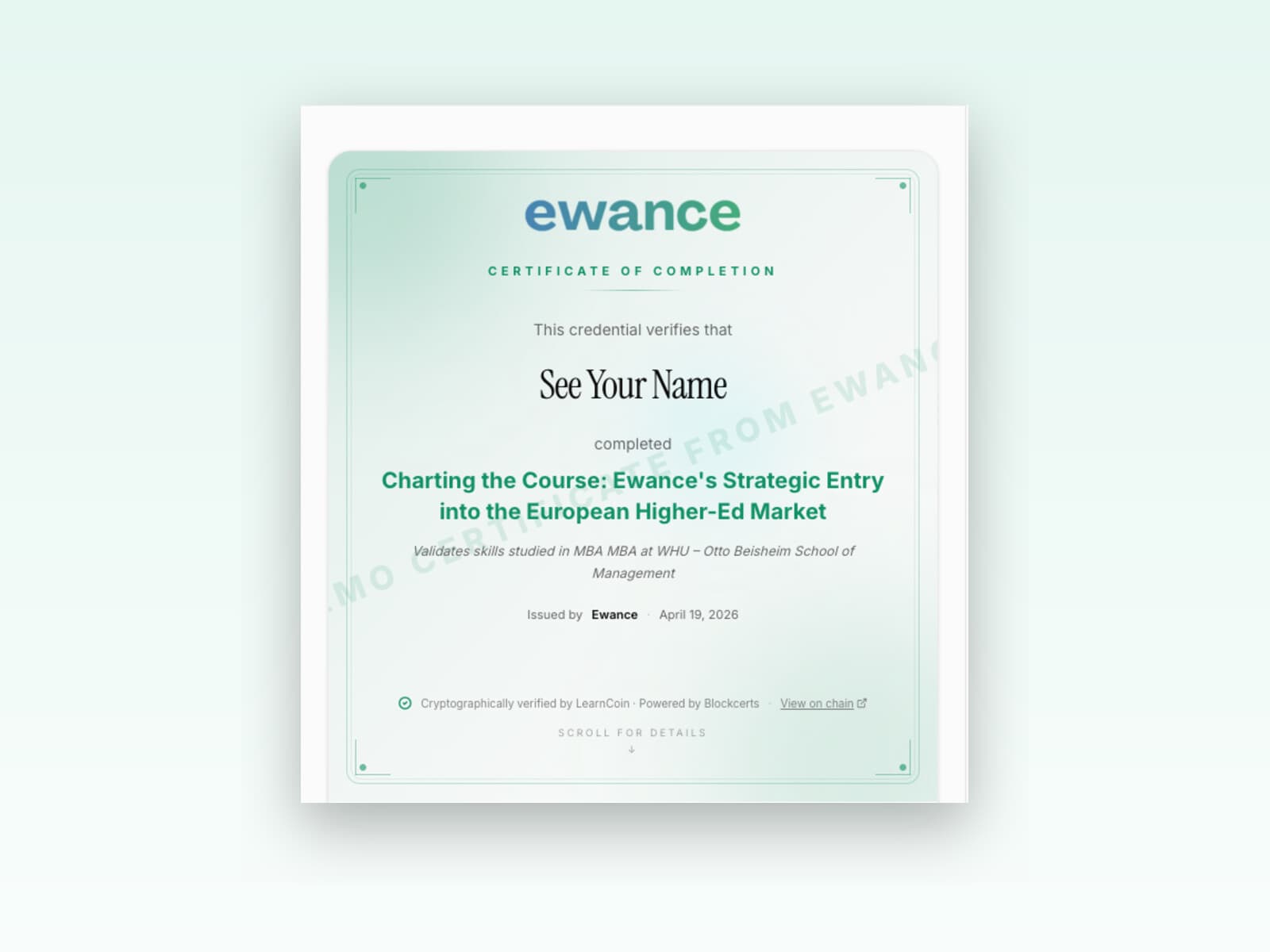
Believed: “Led a 4-person team to build a demand-forecast dashboard for a logistics company; presented findings to their operations manager — verified Ewance credential.”
The second line proves communication, teamwork and problem-solving in one stroke — because it points to real work a recruiter can verify. That's the whole idea behind Ewance: you solve a real company challenge, and the completed work becomes a verifiable credential you can put on your resume — evidence, not adjectives.

Skills by field: examples that aren't generic
Tailor the hard skills to your field, and prove the soft ones with work from it:
- Data science: Python, SQL, machine learning, data visualisation, statistics — plus a project that shipped an insight someone used
- Business & marketing: market analysis, campaign management, Excel/Sheets modelling, analytics — plus a real brief you delivered
- Engineering: CAD, simulation, prototyping, technical documentation — plus a build you can point to
- Finance & accounting: financial modelling, forecasting, reconciliation, Excel — plus an analysis a stakeholder acted on
The pattern holds for every discipline: the hard skills get you past the filter; the evidence gets you the interview.
Want the exact skills for your job title? Browse resume skills by role — the real skills each role screens for, pulled from our taxonomy, with challenges to prove them.

The mistake that gets a resume ignored
The single biggest mistake is listing skills you can't back up — a wall of soft-skill buzzwords with nothing behind them. Recruiters have seen that resume ten thousand times and skim straight past it. The fix isn't a longer list; it's a shorter one where every entry is real and, wherever possible, provable. Three skills you can demonstrate beat twenty you can only assert.
Frequently asked questions
What skills should I put on a resume?
A mix of hard (technical, tool- and role-specific) and soft (transferable) skills, chosen to match the job you’re applying for. For 2026, employers most consistently scan for communication, teamwork, problem-solving and critical thinking, alongside the technical skills the role names — increasingly including AI fluency.
What is the difference between hard and soft skills?
Hard skills are specific, teachable and measurable — Python, financial modelling, CAD, a language. Soft skills are transferable ways of working — communication, teamwork, adaptability, problem-solving. Strong resumes show both, and pair each with evidence.
How many skills should I list on a resume?
Enough to cover the role’s core requirements without padding — usually 8–12, grouped into hard and soft. Depth beats breadth: three skills you can prove beat a wall of buzzwords no recruiter believes.
Should I put AI skills on my resume in 2026?
Yes, if you genuinely use them. AI fluency is now a live requirement in a growing share of entry-level roles, and most graduates learned it independently rather than through their degree — so demonstrable AI skills stand out. List the tools and, ideally, what you built with them.
How do I prove the skills on my resume?
Attach evidence: a project, a measurable outcome, or a verifiable credential from real work. Solving a real industry challenge and earning a credential tied to it turns “strong communicator” from a claim a recruiter discounts into proof they can check.


